
The global landscape of citizenship by investment has evolved significantly, with an increasing number of countries offering pathways to second citizenship through financial contributions. For high-net-worth individuals, investors, and families seeking greater global mobility, tax optimization, and security, understanding which programs deliver the best value is essential. When evaluating the cheapest citizenship by investment options, price is just one factor among many, including processing speed, visa-free travel access, family inclusion, and long-term residency requirements. This comprehensive guide examines the most cost-effective programs available in 2026, breaking down the true costs and benefits of each option.
1. São Tomé and Príncipe: The World’s Newest and Cheapest CBI Option.
Launched in August 2025 under Decree-Law 07/2025, São Tomé and Príncipe now holds the title of the cheapest citizenship by investment program in the world, undercutting even long-standing Caribbean options. The minimum investment is $90,000 for a single applicant, with a non-refundable contribution made to the country’s National Transformation Fund. The program is operated through a Citizenship by Investment Unit based in Dubai, enabling fully remote applications with no residency, language, or interview requirements.
Investment Requirements and Structure
The program offers a single, donation-based investment route with tiered pricing:
- National Transformation Fund contribution: $90,000 for a single applicant
- Family applications (up to four members): $95,000 total contribution
- Each additional dependent beyond four: Contact us for more information
- Additional fees: Due diligence, application processing, and certificate issuance fees apply per applicant (total costs typically reach approximately $95,750 for a single applicant and $105,000 for a family of four)
Eligible dependents include a spouse, unmarried children under 30, and parents aged 55 or older, with the option to add qualifying family members after the initial application is approved. Processing typically completes in two to three months, making it one of the fastest pathways to a second citizenship available today.

Benefits and Considerations
São Tomé and Príncipe’s passport provides visa-free or visa-on-arrival access to approximately 60 to 70 countries and territories, including Hong Kong and Singapore. The processing timeline typically ranges from two to three months from application submission to passport issuance. The program imposes no residency requirements, language tests, or interview obligations, and the entire process can be completed remotely, making it particularly suitable for time-conscious investors.
As one of the world’s newest CBI programs, São Tomé and Príncipe operates through a dedicated Citizenship by Investment Unit based in Dubai, with due diligence handled by independent third-party providers. This modern compliance framework has positioned the program as a credible low-cost entrant, though its shorter track record is worth weighing against more established Caribbean alternatives.
2. Vanuatu: Fastest Processing at Competitive Rates
Vanuatu’s Development Support Program (DSP) and Capital Investment Immigration Plan (CIIP) represent one of the fastest citizenship by investment pathways globally, with approvals frequently granted within 60 to 90 days. The minimum investment stands at approximately $137,000 for a single applicant through the DSP option and $165,000 for the CIIP from a Single applicant to a Family of Four for the same fee, inclusive of a $50,000 redeemable investment.
Speed and Efficiency Advantages
The Vanuatu citizenship by investment program prioritizes efficiency without compromising due diligence standards. The streamlined application process, combined with comprehensive government oversight, has made it increasingly popular among investors who value rapid processing alongside affordability.
Investment requirements break down as follows:
- Single applicant: $137,000 (DSP, donation-only), $165,000 (CIIP, inclusive of $50,000 redeemable investment)
- Family of four: $187,000 (DSP), $165,000 (CIIP)
- Due diligence: Conducted by government-approved agencies
- Processing time: 60-90 days average
Travel and Tax Benefits
Vanuatu’s passport provides visa-free or visa-on-arrival access to over 100 countries and territories, including Hong Kong, Russia, South East Asia, and most Commonwealth countries. Whilst the visa-free access is slightly lower than some Caribbean options, the rapid processing time often makes it the preferred choice for investors with time-sensitive requirements.
The country operates a territorial tax system, meaning residents pay tax only on Vanuatu-sourced income. There are no income taxes, wealth taxes, capital gains taxes, or inheritance taxes for citizens, creating an attractive environment for wealth preservation and succession planning.
3. Antigua and Barbuda: Family-Friendly Pricing Structure
When considering cheapest citizenship by investment options for families, Antigua and Barbuda deserves particular attention. Whilst the single applicant minimum is higher at $130,000 through the National Development Fund, the family pricing becomes increasingly competitive.
Unique Selling Points
- University of the West Indies Fund: $150,000 contribution includes one family member’s tuition (single year)
- No interview requirement: Streamlined application process
- Five-day residence requirement: Minimal physical presence needed within first five years
- Family of four: Approximately $155,000 total investment
The program’s flexibility extends to its definition of dependents. Adult children up to age 30 (if enrolled in university) and parents over 55 can be included, making it particularly suitable for multi-generational families seeking citizenship together.
Antigua and Barbuda’s passport provides access to over 150 countries without a visa, including Hong Kong, Singapore, and the European Schengen zone. The processing timeline typically ranges from four to six months, contingent upon the completeness of documentation and due diligence clearance.
4. Grenada: Strategic Value Beyond Price
Grenada’s Citizenship by Investment Program requires a minimum $150,000 contribution to the National Transformation Fund, positioning it as a mid-range option in Caribbean programs. However, its strategic benefits often justify the moderate premium over the absolute cheapest citizenship by investment programs.
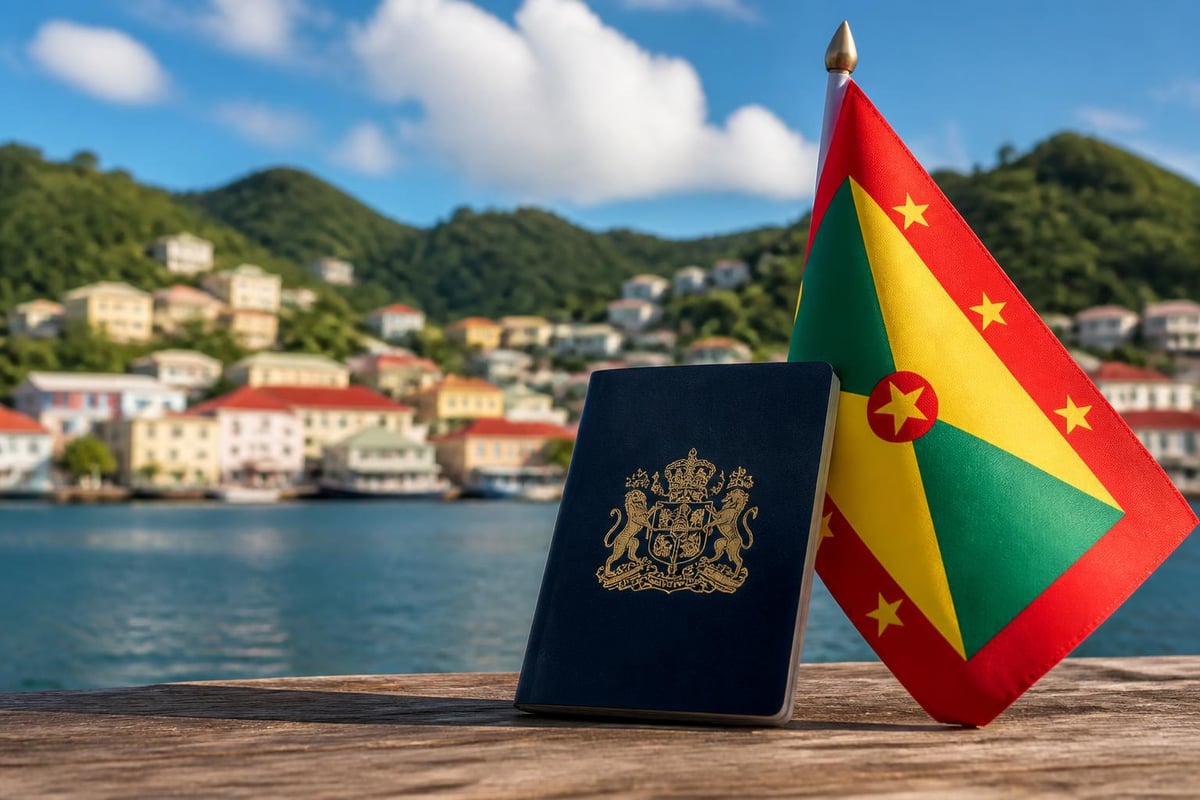
Processing and Requirements Overview:
- Application processing: 4-6 months on average
- Minimum physical presence: None required
- Real estate option: $220,000 minimum investment
- Family inclusion: Competitive pricing for spouses and children
The passport grants visa-free access to over 145 countries, including China, Russia, and the Schengen Area. Grenada also permits dual citizenship without restrictions, providing flexibility for investors who wish to maintain their original nationality.
5. St Lucia: Competitive Pricing with Enhanced Benefits
St Lucia’s Citizenship by Investment Program offers similarly attractive pricing whilst providing some unique advantages that distinguish it from competitors. The minimum investment begins at $100,000 for the National Economic Fund contribution, matching Dominica’s entry price.
| Investment Type | Single Applicant | Family of Four | Holding Period |
|---|---|---|---|
| National Economic Fund | $100,000 | $190,000 | N/A |
| Real Estate | $200,000 | $200,000 + fees | 5 years |
| Enterprise Projects | $3,500,000 | $6,000,000 | 5 years |
| Government Bonds | $300,000 | $300,000 + fees | 5 years |
Distinctive Program Features
St Lucia stands out by offering four distinct investment pathways, providing flexibility for different investor profiles. The government bond option, whilst more expensive than direct donation, is partially refundable, which appeals to investors seeking some capital preservation.
The real estate option requires a lower holding period than Dominica (five years versus seven), which can significantly impact long-term liquidity planning. Processing times average four to five months, slightly longer than Dominica but still competitive globally.
St Lucia’s passport grants visa-free access to over 145 destinations, including the Schengen Area, United Kingdom, and numerous Commonwealth countries. The program has gained recognition for its professional administration and transparent application procedures.
6. Turkey: Volume Leader with Unique Positioning
Turkey’s citizenship program operates at a different scale compared to Caribbean island nations. The minimum investment requirement was adjusted to $400,000 in real estate (held for three years) in 2022, representing a significant increase from previous thresholds but still offering competitive value when considering the destination’s attributes.
| Criteria | Details |
|---|---|
| Minimum Investment | $400,000 (real estate) or $500,000 (bank deposit) |
| Processing Time | 6-8 months |
| Residency Requirement | None |
| Visa-Free Access | 110+ countries |
| Family Inclusion | Spouse and children under 18 |
Strategic Geographic Position
Turkey bridges Europe and Asia, offering unique positioning for business expansion across both continents. The country maintains a customs union with the European Union and has been strengthening economic ties across the Middle East and Central Asia.
The real estate investment route appeals to investors seeking tangible assets with growth potential. Major cities like Istanbul, Ankara, and Izmir have shown resilient property markets, and the three-year holding period is relatively short compared to many Caribbean programs’ five to seven-year requirements.
7. Egypt: Emerging Option with Substantial Investment
Egypt introduced its citizenship by investment program in 2020, requiring a minimum non-refundable deposit of $250,000 to the Treasury or a refundable deposit of $500,000 (returned after three years). Alternatively, investors can purchase real estate worth $300,000, making it a moderately priced option with emerging market exposure.
Market Access and Considerations
Egypt’s strategic position provides access to African, Middle Eastern, and Mediterranean markets. The passport offers visa-free or visa-on-arrival access to approximately 50 countries, which is significantly lower than Caribbean and European programs but may suffice for investors primarily focused on regional business activities.
Processing times vary considerably, ranging from six months to over a year depending on application complexity and government processing capacity. The program remains relatively new, with procedures still being refined and standardized.
Key investment pathways include:
- Bank deposit ($250,000 non-refundable or $500,000 refundable)
- Real estate purchase ($300,000 minimum)
- Business establishment ($350,000 minimum)
- Government bonds ($500,000 minimum)
The Egyptian program appeals primarily to investors with specific business interests in North Africa or the Middle East rather than those seeking maximum global mobility.

8. Hidden Costs and True Total Investment
When evaluating the cheapest citizenship by investment programs, understanding the full financial commitment beyond the minimum advertised investment is crucial. Published minimum amounts rarely reflect the complete expenditure required to obtain citizenship.
Comprehensive Cost Breakdown
Government and Processing Fees:
- Due diligence fees: $5,000-$10,000 per adult applicant
- Processing fees: $1,000-$5,000 per application
- Passport issuance fees: $200-$1,000 per person
- Certificate of citizenship: $100-$500
Professional Service Costs:
- Licensed agent fees: 3-7% of investment amount or $25,000-$50,000 flat fee
- Legal services: $5,000-$20,000
- Documentation preparation and translation: $2,000-$5,000
- Travel expenses for document notarization: Variable
Real Estate Option Considerations:
When selecting property-based routes, additional expenses include:
- Property transfer taxes and stamp duties (2-7% of value)
- Legal fees for property acquisition (1-3% of value)
- Ongoing maintenance and property management (3-5% annually)
- Property insurance and utilities
- Exit costs when selling after holding period
The cumulative effect of these ancillary costs can add 20-40% to the base investment requirement. Prospective applicants should budget accordingly to avoid surprises during the application process.
9. Processing Times and Efficiency Metrics
Speed matters significantly when selecting among the cheapest citizenship by investment programs. Processing duration affects business planning, travel arrangements, and overall opportunity costs for investors.
Comparative Processing Timelines
Fastest Programs (2-3 months):
- Vanuatu DSP: 60-90 days average
- São Tomé and Príncipe: 60-90 days
Standard Processing (3-6 months):
- St Lucia: 120-150 days
- Antigua and Barbuda: 120-180 days
- Grenada: 120-180 days
Extended Processing (6+ months):
- Turkey: 180-240 days
- Egypt: 180-365 days
- Malta: 12-36 months (not among cheapest options)
Processing timelines depend heavily on application completeness, due diligence clearance, and government processing capacity. Incomplete documentation, criminal records requiring additional investigation, or complex financial backgrounds can extend timelines significantly.
Factors Affecting Processing Speed
Several controllable factors influence how quickly applications progress:
- Documentation quality: Complete, properly authenticated documents prevent delays
- Due diligence preparation: Proactive disclosure of potential issues
- Agent experience: Established agents navigate processes more efficiently
- Investment method: Direct donations typically process faster than property routes
- Application volume: Peak periods may slow government processing
Working with experienced professionals who understand each program’s nuances can significantly reduce processing time and minimize rejection risk.
10. Passport Strength and Global Mobility Value
The utility of citizenship correlates strongly with passport power. Comparing visa-free access across the cheapest citizenship by investment programs reveals significant variations in travel freedom.
| Country | Visa-Free Destinations | Notable Access |
|---|---|---|
| St Lucia | 145+ | Schengen, UK, Hong Kong, Singapore |
| Antigua and Barbuda | 150+ | Schengen, UK, Russia, Hong Kong |
| Grenada | 145+ | Schengen, UK, China, Russia, US E-2 eligible |
| São Tomé and Príncipe | 70+ | Singapore, Hong Kong |
| Vanuatu | 100+ | Russia, Hong Kong, South East Asia. |
| Turkey | 110+ | Japan, Singapore, Hong Kong, Qatar |
| Egypt | 50+ | Limited global access, regional focus |
Business Travel Considerations
For entrepreneurs and business professionals, specific destination access carries varying importance. Access to the Schengen Area enables extended European business development without visa complications. Hong Kong and Singapore access facilitates Asian commerce. Russian visa-free entry benefits those with Eastern European or Central Asian interests.
The absence of US visa-free access across Caribbean programs, represents a limitation for those with frequent American business requirements. However, most qualifying investors maintain their original citizenship, providing continued access through their primary passport.
11. Family Inclusion and Dependent Definitions
Family structures significantly impact the true cost of the cheapest citizenship by investment programs. Programs vary considerably in how they define eligible dependents and structure family pricing.
Dependent Eligibility Across Programs
Standard Inclusions:
- Spouse (legally married)
- Children under 18
- Financially dependent children 18-25 (if enrolled in education)
Extended Inclusions:
- Antigua and Barbuda: Children to age 30 if in university, parents 55+, unmarried siblings
- São Tomé and Príncipe: Children to age 30 if in education, parents 50+.
- Grenada: Children to age 30 if in education, parents 55+, unmarried siblings
- St Lucia: Children to age 30 if dependent, parents 55+
- Vanuatu: Children to age 25, parents 50+
Cost Efficiency for Families
When evaluating family citizenship costs, per-person expenses often decrease substantially compared to individual applications:
- São Tomé and Príncipe family of four: $105,000 ($26,250 per person)
- Vanuatu family of four: $165,000 ($41,000 per person) ($50,000 redeemable investment)
- Antigua and Barbuda family of four: $155,000 ($38,750 per person)
- St Lucia family of four: $190,000 ($47,500 per person)
- Grenada family of four: $200,000 ($50,000 per person)
For larger families including parents and adult children, programs with generous dependent definitions provide exceptional value. The ability to include multiple generations under one application can reduce per-capita costs below $30,000 in some scenarios.
12. Tax Implications and Financial Planning
Citizenship acquisition carries tax implications that vary based on the investor’s original nationality, residence location, and the destination country’s tax regime. Understanding these consequences is essential when evaluating the cheapest citizenship by investment programs.
Territorial vs. Worldwide Taxation
Territorial Tax Countries (no tax on foreign income):
- Vanuatu: No income tax, capital gains tax, or inheritance tax
- St Lucia: Territorial system, though global income may be taxable if remitted
Low Tax Jurisdictions:
- Antigua and Barbuda: No capital gains or inheritance tax, low income tax
- Grenada: No worldwide taxation for non-residents
Standard Tax Systems:
- Turkey: Progressive income tax on residents (15-40%)
- Egypt: Progressive tax system (0-25% on income)
US Tax Considerations
American citizens face unique challenges, as the United States taxes worldwide income regardless of residence location. Acquiring second citizenship does not eliminate US tax obligations unless the individual renounces American citizenship, which carries significant implications and exit tax requirements.
The Foreign Account Tax Compliance Act (FATCA) requires financial institutions globally to report American account holders, making it increasingly difficult for US citizens to bank internationally even with second citizenship. Prospective investors should consult specialized tax advisors before proceeding.
Reporting Requirements
Most developed nations require disclosure of foreign assets and income. Countries including Canada, United Kingdom, Australia, and EU member states have various reporting thresholds and requirements. Failure to properly declare foreign assets and citizenship can result in substantial penalties.
Second citizenship itself doesn’t typically create immediate tax liability, but the act of investing (such as selling assets to fund the investment) may trigger capital gains taxes in the investor’s current residence country.
13. Due Diligence Standards and Reputation
The integrity of citizenship by investment programs directly affects passport utility and long-term value. Stringent due diligence protects program reputation, which in turn maintains visa-free access agreements and international standing.
Enhanced Due Diligence Procedures
Caribbean programs have significantly strengthened screening processes following international pressure, particularly from the European Union and United Kingdom:
- Multi-jurisdictional background checks across residence and citizenship countries
- Financial source verification requiring documentation of wealth origin
- Criminal record checks including minor offences and pending investigations
- Interpol database screening for all applicants
- Enhanced monitoring of high-risk applicants
Rejection rates vary by program but generally range from 5-15% of applications. Common rejection reasons include incomplete financial documentation, undisclosed criminal history, association with sanctioned entities, or failure to prove legitimate fund sources.
Reputational Risk Assessment
Several citizenship programs have faced international scrutiny, leading to visa-free access revisions.
When selecting among the cheapest citizenship by investment options, applicants should consider:
- Program history and stability (older programs generally have stronger reputations)
- Government commitment to compliance and transparency
- International relationships and diplomatic standing
- Recent visa-free access changes (improvements or restrictions)
- Due diligence standards relative to international best practices
Programs that maintain membership in international bodies and adhere to enhanced screening protocols typically offer better long-term value despite potentially longer processing times.
14. Real Estate Investment Routes: Risks and Returns
Property-based citizenship investment requires careful analysis beyond citizenship benefits, as investors commit substantial capital to foreign real estate markets with specific holding period requirements.
Market Performance Considerations
Caribbean real estate markets serve primarily tourism and second-home buyers, creating cyclical demand patterns. The 2020-2022 pandemic severely impacted Caribbean tourism, affecting property values and rental yields. Recovery has been strong but uneven across islands.
Typical Real Estate Investment Returns:
- Rental yields: 3-6% gross annual (when actually rented)
- Vacancy rates: 30-60% in citizenship-specific developments
- Management fees: 20-30% of rental income
- Maintenance costs: 2-4% of property value annually
- Appreciation: 0-3% annually in most markets
Many citizenship-approved properties are purpose-built developments marketed primarily to citizenship seekers rather than traditional buyers. This can create liquidity challenges when selling after the mandatory holding period, as the resale market is limited to other citizenship applicants or vacation buyers.
Exit Strategy Planning
Investors should plan exit strategies before committing to real estate routes:
- Market absorption capacity (how many similar properties are for sale)
- Developer reputation and financial stability (some projects fail mid-construction)
- Property location relative to tourism infrastructure
- Resale restrictions in citizenship program terms
- Tax implications of property ownership and eventual sale
Direct donation routes, whilst offering no capital recovery, eliminate property management burdens, ongoing costs, and resale uncertainty. For investors without genuine interest in Caribbean real estate ownership, donation routes typically prove more straightforward despite being non-refundable.
15. Comparing Value Beyond Price Alone
Determining the cheapest citizenship by investment program requires looking beyond upfront costs to assess comprehensive value across multiple dimensions.
Multi-Factor Value Assessment
Short-term Priorities:
- Processing speed for urgent travel needs
- Immediate visa-free access to specific target countries
- Minimal residence or presence requirements
- Straightforward application process
Long-term Considerations:
- Passport strength trajectory (improving or declining visa access)
- Political and economic stability of issuing country
- Tax optimization opportunities
- Succession planning and generational transfer
- Business expansion and residency options in connected jurisdictions
Family-Specific Factors:
- Dependent inclusion flexibility
- Education opportunities in citizenship country
- Healthcare system quality and access
- Retirement residence possibilities
- Cultural and linguistic compatibility
Opportunity Cost Analysis
The difference between a $100,000 program and a $150,000 program may seem substantial initially, but the opportunity cost of choosing the cheaper option could exceed the savings if it requires:
- Additional time investment due to slower processing
- Restricted travel requiring visa applications for frequently visited destinations
- Limited business opportunities due to passport weakness
- Complicated tax situations requiring expensive ongoing compliance
Professional evaluation of personal circumstances should drive selection rather than price alone. An extra $50,000 invested in a superior program may deliver substantially greater lifetime value through enhanced mobility, business opportunities, and flexibility.
For investors prioritizing rapid processing with competitive pricing, Vanuatu’s program deserves particular consideration. The Vanuatu Citizenship by Investment – DSP combines efficiency with comprehensive benefits, offering approval within 60-90 days at a total cost competitive with other programs whilst maintaining robust due diligence standards.
Selecting the cheapest citizenship by investment program requires balancing upfront costs against processing speed, passport strength, family inclusion, and long-term strategic value. Whilst programs like São Tomé and Príncipe and Antigua offer the lowest absolute entry prices, Vanuatu, St Lucia, and Grenada provide compelling alternatives when considering processing efficiency and specific benefits like US E-2 treaty access. VIMB – Vanuatu Investment Marketing Bureau specializes in guiding investors through the Vanuatu citizenship application process, providing expert support from initial consultation through citizenship approval, with offices across London, Dubai, and Vanuatu to serve clients globally.